In the fast-paced world of software development, microservices architecture has emerged as a powerful approach to building scalable, flexible, and maintainable applications. Unlike traditional monolithic architectures, where everything is tightly coupled in a single codebase, microservices break down an application into smaller, independent services that can be developed, deployed, and scaled individually. This modular design promotes agility, resilience, and easier collaboration among development teams.
If you’re new to microservices or looking to deepen your understanding, this article dives into the core components of a typical microservices architecture. We’ll explore how these elements work together to create robust systems, drawing from a standard architectural diagram that illustrates the flow from client interactions to backend services. Whether you’re a developer, architect, or tech enthusiast, this guide will help you grasp the essentials.
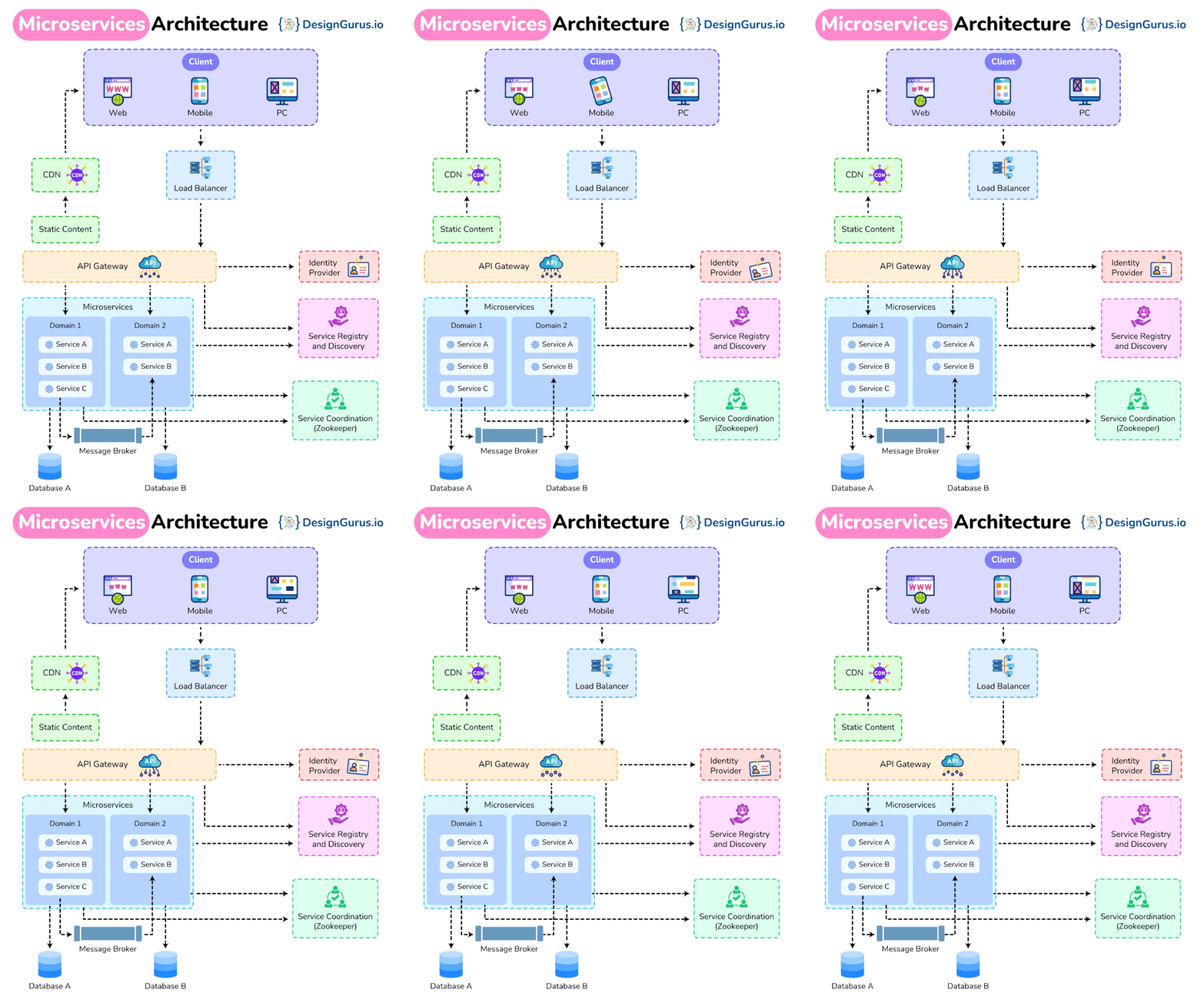
The Big Picture: How Microservices Fit Together
Imagine an application as a collection of puzzle pieces rather than a single block. Each piece (microservice) handles a specific function, communicating with others as needed. The architecture typically includes clients accessing the system through various devices, traffic management layers, and backend components for data handling and coordination.
In a visual representation, clients connect via web, mobile, or PC interfaces. Traffic routes through content delivery networks (CDNs) for static assets and load balancers for dynamic requests, funneling into an API gateway. From there, requests reach the microservices, which interact with databases, message brokers, and supporting tools like identity providers and service registries. This setup ensures efficiency, security, and scalability.
Now, let’s break down the 10 key components that make this architecture tick.
1. Client
At the front end of the architecture are the clients—the end-users interacting with the application. These can include web browsers, mobile apps, or desktop software on PCs. Clients send requests to the system, expecting quick responses and seamless experiences. In microservices, the client’s role is to consume services without needing to know the underlying complexity, making the architecture user-centric from the start.
2. CDN (Content Delivery Network)
CDNs are essential for optimizing performance, especially for global applications. They cache and deliver static content—such as images, CSS stylesheets, and JavaScript files—from servers located closer to the user. This reduces latency, minimizes load on origin servers, and improves overall load times. By handling static assets separately, CDNs allow the core microservices to focus on dynamic processing.
3. Load Balancer
To handle high traffic volumes without overwhelming any single server, load balancers distribute incoming requests across multiple instances. This ensures balanced resource utilization, prevents bottlenecks, and enhances reliability—if one server fails, traffic seamlessly shifts to others. Load balancers are crucial for maintaining availability in distributed systems like microservices.
4. API Gateway
Think of the API Gateway as the front door to your microservices ecosystem. It serves as a single entry point for all client requests, managing tasks like routing, request composition, and protocol translation. By abstracting the internal structure, it simplifies client interactions and allows for features like rate limiting, caching, and security enforcement. This component is key to orchestrating calls across multiple services without exposing their intricacies.
5. Microservices
The heart of the architecture lies in the microservices themselves. Each is a self-contained unit responsible for a specific business domain or function, such as user authentication, payment processing, or inventory management. Grouped into domains (e.g., Domain 1 with Services A, B, C), they communicate via lightweight APIs, often using HTTP/REST or gRPC. This independence allows teams to develop, test, and deploy services separately, fostering innovation and faster iterations.
6. Message Broker
Microservices need to talk to each other without tight coupling, and that’s where message brokers come in. They act as intermediaries, queuing and routing messages between services asynchronously. This decoupling enables features like event-driven architectures, where one service can publish events (e.g., “order placed”) for others to subscribe to. Popular tools like Kafka or RabbitMQ ensure reliable communication, even if services are temporarily unavailable.
7. Databases
In microservices, data management emphasizes decentralization. Each service often has its own dedicated database (e.g., Database A for one domain, Database B for another), promoting loose coupling and allowing the use of the most suitable database type—SQL for structured data, NoSQL for flexibility. This “database per service” pattern prevents a single point of failure and enables independent scaling, though it requires careful handling of data consistency across services.
8. Identity Provider
Security is non-negotiable in distributed systems. The identity provider handles user authentication and authorization, verifying who can access what. It integrates with the API Gateway to enforce policies, often using standards like OAuth or JWT tokens. This component ensures that only authorized users interact with sensitive services, protecting the entire architecture from unauthorized access.
9. Service Registry and Discovery
With services constantly scaling up or down, how do they find each other? Enter the service registry—a dynamic directory where services register their locations and metadata upon startup. Discovery mechanisms allow services to query this registry to locate peers at runtime. Tools like Consul or Eureka make this process seamless, enabling resilient communication in dynamic environments.
10. Service Coordination (e.g., Zookeeper)
Coordinating distributed services can be chaotic without proper tools. Service coordinators like Apache Zookeeper manage configuration, synchronization, and leader election across nodes. They ensure that services work harmoniously, handling tasks like distributed locking or monitoring health. This component is vital for maintaining order in large-scale microservices deployments.
Why Microservices Matter: Benefits and Considerations
Adopting microservices isn’t just about following a trend—it’s about building systems that can evolve with business needs. Benefits include improved scalability (scale only what’s needed), faster deployment cycles, and technology diversity (use the best tool for each service). However, it comes with challenges like increased complexity in monitoring, inter-service communication, and data management.
To succeed, focus on robust DevOps practices, containerization (e.g., Docker), and orchestration (e.g., Kubernetes). Start small, perhaps by decomposing a monolith gradually, and always prioritize observability with tools like Prometheus or ELK Stack.
In summary, microservices architecture transforms how we build software, emphasizing modularity and resilience. By understanding these 10 components, you’re better equipped to design or contribute to modern applications. If you’re implementing this in your projects, experiment with open-source tools and share your experiences in the comments below!
This article is inspired by insights from DesignGurus.io. For more visual aids and in-depth courses, check out their resources.